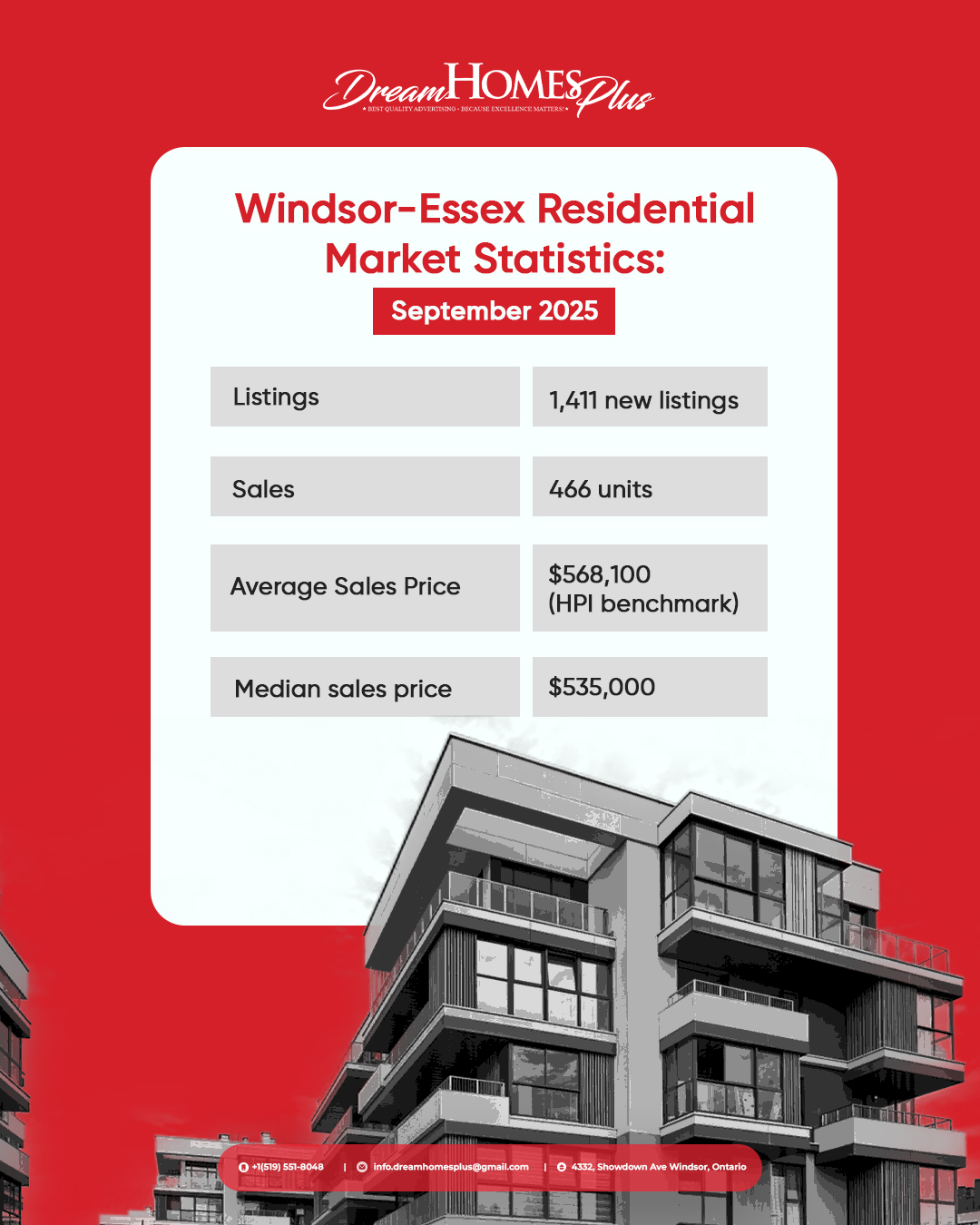
Windsor-Essex Real Estate Market Update – September 2025

The Windsor-Essex real estate market wrapped up the third quarter of 2025 with a steady pace, signaling a balanced environment for both buyers and sellers. While price growth has slowed compared to the sharp increases of previous years, overall stability continues to define the region’s housing activity. According to the latest figures from the Canadian Real Estate Association (CREA) and the Windsor-Essex County Association of REALTORS® (WECAR), September 2025 presented a consistent flow of listings and maintained home prices close to those seen earlier in the year. Market Highlights for September 2025 New Residential Listings: 1,411Homes Sold: 466Average Sales Price (HPI Benchmark): $568,100Median Sales Price: $535,000 What the Numbers Mean The Windsor-Essex market has been experiencing what many would call a “soft landing.” After several years of rapid price appreciation, 2025 has brought more stability. The slight dip in prices, around one to two percent compared to last year, suggests that values are normalizing rather than declining sharply. The number of new listings, 1,411, indicates that sellers remain confident in the local market. A total of 466 homes sold in September reflects steady buyer demand, even amid fluctuating interest rates and broader economic caution. Homes in Windsor-Essex continue to stand out as some of the most affordable in Southern Ontario, especially when compared to nearby markets such as London, Kitchener-Waterloo, and the Greater Toronto Area. For Buyers If you have been waiting for the right time to enter the market, September’s numbers show a promising opportunity. A growing inventory of listings means more options, less competition, and room to negotiate favorable terms. Buyers who are pre-approved and ready to move quickly will benefit most, particularly as the fall season often brings motivated sellers looking to close before year-end. For Sellers For homeowners considering listing their property, now is a strategic time to do so. Although prices have stabilized, presentation and pricing accuracy remain critical. Professional photography, home staging, and working with an experienced real estate agent can make all the difference in attracting serious and qualified buyers. Looking Ahead As Windsor-Essex enters the final quarter of 2025, the market is expected to maintain its balance. While interest rate decisions and national housing policies will continue to shape buyer confidence, local demand remains strong thanks to the area’s affordability, job growth, and family-friendly appeal. DreamHomesPlus will continue to monitor these trends closely and provide monthly insights to help you stay informed about the Windsor-Essex housing market. Whether you are planning to buy, sell, or simply stay updated, keeping an eye on these numbers helps you make confident and timely decisions. Key Takeaway The Windsor-Essex market in September 2025 remained stable and balanced, showing healthy levels of activity and price consistency. Buyers are gaining more flexibility, while sellers continue to benefit from steady home values in one of Ontario’s most affordable and attractive regions. Source:Canadian Real Estate Association (CREA) – Windsor-Essex Market Data


4 Key Trends Shaping Windsor’s Real Estate Market Over the Next 5 Years

Windsor, Ontario, is a city on the rise, with its real estate market poised for dynamic changes over the next five years. From a booming population to a thriving economy driven by the auto industry and cross-border trade, Windsor is becoming a hotspot for homebuyers, renters, and investors alike. At Dream Homes, we’re excited to break down the four key trends that will shape Windsor’s housing market through 2030, offering insights for anyone looking to buy, sell, or invest in this vibrant city. 1. Population Growth & Immigration Fueling Demand Windsor’s population is growing at an unprecedented rate, driven by a steady influx of new immigrants, international students, and temporary workers. This demographic surge is significantly boosting housing demand, as more people seek homes to buy or rent in the city. For those dreaming of a home in Windsor, now is the time to explore options before demand pushes prices higher. At Dream Homes, we can help you find the perfect property to match your needs in this growing market. 2. The Rental Market: Rising Rents and Supply Dynamics Windsor’s rental market has been a hot topic, with rents climbing steadily in recent years due to strong demand and limited supply. However, recent shifts in housing construction are starting to reshape this landscape. For renters, this could mean more options in the coming years, while investors should keep an eye on supply trends to maximize opportunities. Dream Homes offers expert guidance for navigating Windsor’s rental market, whether you’re leasing or investing. 3. Housing Supply & New Starts: Balancing Affordability Windsor is tackling its housing shortage head-on, with a surge in new housing starts aimed at meeting rising demand. The mix of condos, rentals, and single-family homes will play a critical role in shaping affordability. For homebuyers, this means more choices, from modern condos to spacious family homes. Dream Homes can connect you with new developments or resale properties that fit your budget and lifestyle. 4. Local Economy & Jobs: The Engine of Housing Demand Windsor’s economy, anchored by its auto industry, electric vehicle (EV) projects, and proximity to Detroit, is a major driver of housing demand. As job opportunities grow, so does the need for housing. Whether you’re relocating for a job or seeking a stable investment, Windsor’s economic strength makes it an ideal place to plant roots. Dream Homes is here to help you find a property that aligns with your career and financial goals. Looking Ahead: Why Windsor’s Market Matters Windsor’s real estate market is at a pivotal moment. With population growth, evolving rental dynamics, new housing developments, and a thriving economy, the city offers opportunities for buyers, renters, and investors alike. Over the next five years, these trends will shape affordability, availability, and investment potential, making Windsor a market to watch. At Dream Homes, we’re committed to helping you navigate this exciting landscape. Whether you’re searching for your dream home, a rental property, or an investment opportunity, our team has the expertise to guide you every step of the way. Contact us today to explore Windsor’s real estate market and find your perfect property! Sources: Statistics Canada, CMHC Housing Market Outlook, Windsor Star, local economic reports.

September 22, 2025 Dreamhomes No Comments

Windsor-Essex & Chatham-Kent Housing Market Update: August 2025

Welcome to the latest housing market update from DreamHomes Plus Media! If you’re dreaming big in Windsor-Essex or Chatham-Kent, now’s a fantastic time to dive into the local real estate scene. Our housing market is buzzing with opportunity this fall, and we’ve got the numbers to prove it. Let’s break down the August 2025 stats, courtesy of the Windsor-Essex County Association of REALTORS®, and see what they mean for you! Home Sales: Momentum is Building! In August 2025, 429 homes were sold across Windsor, Essex County, and Chatham. That’s a clear sign of a vibrant market with real momentum for both buyers and sellers. Whether you’re looking to list your property or searching for your dream home, the activity in our communities shows there’s plenty of opportunity to make your move. Average Sale Price: A Sweet Spot for Buyers The average sale price in August hit $567,000—a sweet spot for finding your dream home without breaking the bank. Even better? This figure is slightly down from last year, making the market more buyer-friendly. Whether you’re eyeing a cozy Chatham bungalow or a spacious family haven in Essex, now’s a great time to explore what’s out there. Year-to-Date Trends: Steady and Predictable Looking at the bigger picture, the year-to-date average sale price is $563,981. This steadiness makes it easier to plan your next steps, whether you’re a first-time buyer, upgrading to a larger home, or downsizing for a simpler lifestyle. A predictable market like this gives you the confidence to act when the right property comes along. What’s Your Dream Home Vibe? The Windsor-Essex and Chatham-Kent markets are inviting you in! Are you picturing a charming bungalow in Chatham, perfect for quiet evenings? Or maybe a sprawling family home in Essex with room for everyone? Whatever your dream home vibe, our team at DreamHomes Plus Media is here to help you find it. Let’s Make It Happen! Ready to take the next step? Visit us at dreamhomeplus.ca to browse personalized listings tailored to Windsor-Essex and Chatham-Kent. You can also DM us on social media for expert guidance or drop a comment below to share your dream home vision. Let’s turn your dream into reality! Source: Windsor-Essex County Association of REALTORS®#WindsorEssexRealEstate #ChathamKentHomes #DreamHomesPlus #LocalMarketStats #OntarioHousing

September 15, 2025 Dreamhomes No Comments

Canada’s 2025 Housing Market: Trends to Know Before You Buy or Sell

The Canadian housing market in 2025 is a dynamic landscape, shaped by economic shifts, regional differences, and evolving buyer priorities. Whether you’re eyeing a new home, planning to sell, or just curious about what’s next, understanding key trends is essential to making informed decisions. From rising interest rates to dipping prices in major cities, here’s what you need to know about Canada’s 2025 housing market—plus tips to stay ahead. Let’s dive in! 1. Rising Interest Rates Squeeze Affordability The Bank of Canada’s policy rate, steady at 2.75% as of July 2025, has kept borrowing costs higher than pre-pandemic lows, putting pressure on affordability. With 5-year fixed mortgage rates hovering around 3.79-3.94% (down from mid-2025 highs of ~5.5%), qualifying for a mortgage now requires a higher income or a bigger down payment. For example, a $500,000 mortgage at 3.9% over 25 years means monthly payments of about $2,600, compared to $2,100 at 2022’s lower rates. This shift is cooling demand, especially for first-time buyers in pricier markets like Ontario and BC. The Canada Mortgage and Housing Corporation (CMHC) notes that economic uncertainty, including new US tariffs, is further tightening budgets. Tip: Consider adjustable-rate mortgages if you’re comfortable with potential rate fluctuations, or explore smaller markets like Calgary for better affordability. 2. Toronto and Vancouver: Prices Dip as Inventory Rises Canada’s two priciest cities, Toronto and Vancouver, are seeing price corrections in 2025, driven by high inventory and cautious buyers. According to August 2025 data, Toronto’s benchmark home price is $969,700, down 5.2% year-over-year, while Vancouver’s sits at $1,150,400, down 3.8%. Active listings are up 30-40% in both markets, creating a buyer’s advantage not seen in years. Why the dip? Sellers are listing more properties to capitalize on pre-2026 recovery hopes, but demand is tempered by affordability challenges and economic headwinds. Rural and suburban areas around these cities are also softening, though less dramatically. Tip: If you’re selling, price competitively to stand out. Buyers, use this window to negotiate—especially in Toronto’s condo market, where supply is high. 3. Pre-Approvals: Your Competitive Edge With 50% of Canadian buyers starting their home search online (up from 43% in 2024, per industry trends), preparation is key in 2025’s competitive pockets. A mortgage pre-approval locks in your rate for up to 120 days, protecting you from potential rate hikes (e.g., if the Bank of Canada adjusts post-September 17). It also signals to sellers that you’re serious, giving you an edge in markets like Toronto, where bidding wars persist for well-priced homes. Pre-approvals are especially critical as lenders tighten criteria due to higher rates and economic uncertainty. CMHC reports that 20% of buyers face delays without pre-approval due to unexpected qualification issues. Tip: Get pre-approved early through a trusted lender or broker, and compare rates on platforms like Ratehub to secure the best deal. What’s Next for Canada’s Housing Market? Looking ahead, CMHC and RBC forecast modest sales growth in 2025 but continued price softness in Ontario and BC, with recovery likely in 2026 as rates stabilize and tariffs ease. Smaller markets like Alberta and Atlantic Canada may see steadier gains due to affordability and migration trends. Staying informed is your best tool—whether you’re buying, selling, or just planning for the future. Stay Ahead with Dream Homes Plus Ready to navigate the 2025 market like a pro? Explore more expert insights, tips, and trends in our blog From finance strategies to regional market updates, we’ve got everything you need to make your next move

From Hype to Reality: Which 2025 Market Predictions Are Actually Coming True?

As we pass the halfway mark of 2025, it’s time to separate signal from noise. The start of the year was filled with bold predictions from AI-led revolutions to fears of recession, to surging energy prices and booming green investments. But how many of these forecasts have truly panned out? Investors, founders, and market watchers know that hype can often overshadow substance. Some trends fizzle as fast as they rise, while others quietly build momentum in the background. In this article, we’ll look at the top 2025 market predictions that are actually materializing and what they mean for businesses and investors heading into Q4. 1. AI Is Eating the Workforce — But Not in the Way You Think Prediction: AI would replace millions of jobs by mid-2025.Reality: AI adoption is accelerating, but the outcome is more augmentation than replacement. While fears of mass layoffs haven’t come true at scale, companies are actively using AI to automate repetitive tasks, boost productivity, and enable smaller teams to do more. What’s real is the rise of “AI collaborators”, employees using tools like ChatGPT, Copilot, and other domain-specific AIs to enhance their work. Insight: AI-literate workers are now more valuable than ever. Expect demand for AI upskilling platforms to rise through Q4. 2. Green Energy Demand Is Soaring Prediction: Renewable energy investment would break records in 2025.Reality: It’s happening especially in solar, wind, and battery storage. According to the IEA, global investments in clean energy are projected to exceed $2 trillion by year-end. Emerging markets are seeing an influx of capital as governments and private firms race toward decarbonization. Insight: Investors are shifting from ESG buzzwords to tangible returns in green infrastructure. The opportunity is long-term and real. 3. The Creator Economy Is Maturing — Fast Prediction: The creator economy would plateau.Reality: Instead of shrinking, it’s evolving. Many creators are building micro-businesses, leveraging tools to launch products, memberships, and even their own tech platforms. Platforms like Substack, Patreon, and Gumroad report steady growth, while AI tools are helping creators scale without burnout. Insight: The creator economy is no longer a side hustle, it’s a scalable business model for digital-first entrepreneurs. 4. Global Real Estate Is Bifurcating Prediction: Urban real estate markets would recover strongly post-2024.Reality: Recovery is uneven and investors are adapting. While luxury and suburban markets are rebounding, many urban centers face rising vacancy rates in commercial real estate. Meanwhile, affordable housing and “Zoom towns” continue to see sustained demand. Insight: Real estate investors are shifting strategies, focusing on flexible, mixed-use spaces and long-term rentals in lifestyle-focused areas. 5. De-Dollarization Is a Quiet, Growing Undercurrent Prediction: The U.S. dollar’s dominance would face real pressure.Reality: Not headline-worthy yet but it’s slowly happening. Countries like China, Brazil, and Russia are increasingly trading in local currencies. Meanwhile, digital currencies and CBDCs (central bank digital currencies) are gaining ground, especially in Asia and Latin America. Insight: While the dollar isn’t going anywhere fast, investors are paying closer attention to FX risks and regional shifts in trade finance. Final Take Market predictions often sound bolder than they are. But halfway into 2025, it’s clear that while some hype has faded, a few forecasts have matured into real, investable trends. For investors and business leaders, the key isn’t just spotting trends, it’s knowing when hype turns into movement. As we enter Q4, staying ahead requires more than optimism. It requires analysis, adaptability, and a strong network to act on real signals in real time.

The Top 5 Emerging Market Trends Every Investor Should Watch in Q4 2025

As we enter the final quarter of 2025, the global investment landscape is evolving at an accelerated pace. After a volatile start to the year marked by inflationary pressures, fluctuating interest rates, and persistent geopolitical tensions, Q4 is shaping up to be a pivotal period for investors across the board. The nature of investing has changed. Markets are more reactive, cycles are shorter, and disruptions can come from anywhere, technology, climate, policy, or social shifts. Today, investors must look beyond earnings reports and price charts. The smartest capital is moving in anticipation of what’s next, not what’s already happened. In this blog post, we break down five key trends that are expected to shape market sentiment and investment strategy in Q4 2025 and beyond. Whether you’re a retail investor seeking opportunities or an institutional player managing portfolios, these trends will offer valuable direction. 1. AI-Driven Productivity Is Reshaping Business Models Artificial Intelligence has shifted from buzzword to baseline. Companies leveraging AI tools are now gaining a real competitive edge, automating operations, improving customer experiences, and even predicting market behavior. In Q4, expect increased investment in AI infrastructure, particularly in sectors like healthcare, finance, e-commerce, and logistics. Investors should look for companies embedding AI deeply into their operations, not just using it as a side tool. Insight: According to McKinsey’s 2025 Global AI Survey, 60% of companies deploying AI report direct revenue increases tied to its usage. 2. Sustainable Investing Gains New Momentum Environmental, Social, and Governance (ESG) principles are no longer “nice to have”, they’re becoming a core filter in investment decisions. However, there’s a noticeable shift: investors now demand measurable impact, not just sustainability promises. In Q4, capital is flowing into companies and funds focused on green energy, climate adaptation technologies, and circular economy solutions. Watch for new ESG indexes and more scrutiny around carbon offset claims. Stat: Morningstar reported a 13% increase in ESG fund inflows during Q3 2025—indicating strong ongoing demand. 3. Frontier Markets Are Attracting Renewed Attention While traditional markets continue to command attention, frontier economies in Africa, Southeast Asia, and parts of Latin America are starting to steal the spotlight. These regions boast young populations, digital-first adoption, and improved political environments, creating new investment frontiers. Investors looking for long-term upside should monitor fintech, e-commerce, and infrastructure development in these regions. Case in Point: Nigeria’s tech sector is projected to grow by 45% in 2025, with mobile money and agritech leading the charge (Source: Partech Africa). 4. Real Estate Is Being Redefined by Hybrid Lifestyles The pandemic may be behind us, but its effects on work and lifestyle are permanent. Hybrid work models have shifted real estate demand toward suburban and secondary cities. In Q4, watch for increased investor interest in: REITs that adapt to these new preferences or companies repurposing commercial real estate into flexible residential spaces are poised to benefit. Pro Tip: The “15-minute city” concept is gaining traction, offering residents access to everything they need within a short walk or bike ride. 5. Tokenized Assets & Digital Infrastructure Are Going Mainstream Blockchain is evolving beyond cryptocurrencies. One of the biggest innovations? Tokenized real-world assets think real estate, art, bonds, and equity made tradable on blockchain platforms. This approach offers investors liquidity, fractional ownership, and new asset classes previously reserved for institutions. As regulations become clearer, Q4 2025 could be the inflection point for wider adoption. Forecast: Boston Consulting Group estimates the tokenized asset market could grow to $16 trillion by 2030. Final Thoughts The pace of change in 2025 has been staggering and the last quarter of the year is no exception. Investors who take time to understand macro-level patterns and apply them to their strategy will be best positioned to capture long-term gains. Whether you’re building your first portfolio or managing a complex fund, keeping these emerging trends on your radar is no longer optional, it’s essential. Stay curious, stay agile, and most importantly, stay informed.

Top 5 Things That Affect Property Value (And How to Boost Yours Before You Sell)

If you are planning to sell your home or simply want to increase its worth, it helps to understand what truly influences property value. At Dream Homes Plus, we work closely with buyers and sellers who want to make smart moves in the market. Here are the top five factors that affect home value and what you can do to raise yours. 1. Location The old saying is true — location matters most in real estate. Homes in desirable neighborhoods, close to schools, transport, shops, or parks tend to attract more buyers and sell for higher prices. Tip to boost: Highlight your home’s location benefits in your listing. If possible, improve access to nearby amenities such as adding signage or better landscaping. 2. Condition of the Home A well-maintained property always commands a better price. Buyers look for homes that are move-in ready and do not require major repairs or upgrades. Tip to boost: Make small improvements like repainting walls, fixing leaky faucets, or updating outdated light fixtures. These low-cost changes can make a big difference in buyer perception. 3. Home Upgrades and Renovations Smart upgrades can significantly increase your home’s value. Kitchen remodels, updated bathrooms, and modern flooring are all attractive to buyers. Tip to boost: Focus on high-return renovations. For example, refreshing your kitchen with new cabinet handles, lighting, or countertops can bring strong ROI without a full remodel. 4. Curb Appeal First impressions count. The exterior of your home sets the tone for the rest of the viewing experience. Homes with neat landscaping, clean driveways, and fresh paint tend to sell faster and for more money. Tip to boost: Trim overgrown bushes, add potted plants by the entrance, repaint the front door, and power-wash walkways to give your home instant appeal. 5. Market Conditions Your local real estate market will always influence property value. In a seller’s market, prices rise due to high demand. In a buyer’s market, competition may lead to lower prices. Tip to boost: Work with a local expert like Dream Homes Plus to understand current trends and time your sale wisely for maximum return. Conclusion Knowing what affects your home’s value gives you an advantage when selling or investing in real estate. By making targeted improvements and staying informed, you can increase your property’s appeal and selling price. If you’re thinking about selling or want to increase your home’s value, Dream Homes Plus is here to help. Contact us today for a property evaluation or personalized selling strategy.

Is Now the Right Time to Buy a Home? What 2025 Real Estate Trends Are Saying

Deciding when to buy a home is one of the most important financial choices you can make. Many buyers are asking the same question in 2025: Is now a good time to purchase property? At Dream Homes Plus, we understand how confusing the market can seem. That’s why we’ve put together this simple guide to help you make a smart and confident decision. 1. Interest Rates Are Stabilizing After a period of fluctuating rates, 2025 is seeing a more stable lending environment. Mortgage interest rates have gradually leveled off, creating more predictability for homebuyers. While they may not be as low as in previous years, the current rates are still competitive and allow for long-term financial planning. 2. Buyer Demand Is Returning In many areas, buyer activity is increasing again. With more people returning to the market and fewer homes sitting unsold, this signals growing confidence in the housing sector. If you have been waiting for the right moment, this could be the time to act before prices rise further. 3. Housing Inventory Remains Tight One ongoing challenge is the limited number of homes for sale in certain markets. This creates higher competition and upward pressure on prices. Acting sooner rather than later may help you avoid bidding wars or future price increases. 4. More Flexible Work and Lifestyle Choices Remote and hybrid work trends continue to influence home preferences. Many buyers are looking for homes that offer more space, dedicated work areas, or are located outside major city centers. This shift means now is a great time to find a property that truly fits your lifestyle. 5. Real Estate Is Still a Strong Long-Term Investment Despite short-term market shifts, real estate remains one of the most reliable long-term investments. Owning property provides equity, stability, and future financial security. Conclusion The 2025 real estate market shows signs of recovery, strength, and opportunity. While every buyer’s situation is unique, current trends suggest that now can be a smart time to buy — especially with guidance from professionals who understand the market. At Dream Homes Plus, we are here to help you make the best real estate decision for your future. Contact us today to start your home search with expert support and local insight.

Advice For Anyone Buying A New Home

A key concern of aspiring homeowners is wondering how their future property will hold up in value through the coming years. Read on for some valuable tips. Be moderate in your real estate negotiations. The worst thing to do is be aggressive with the price. However, you should always stand firm on your wants. Allow your lawyer and Realtor to attend negotiations because they have experience in negotiating. Real estate agents should keep in contact with former clients over the holidays and on the anniversaries of their home-buying. When you contact them, they will recall how you helped them with their real estate experience. Give them a friendly reminder that you make money through referrals, so you would be pleased if they could mention your name to others. When considering relocation, look no further than the Internet to find all the pertinent information about the town. You can discover a great deal of information this way. Take into account factors such as cost of living, unemployment rates, population makeup and density to ensure you’re moving to a place with a lifestyle that’s suited to your needs. Houses that need some “tender loving care” are priced less. This saves you money on your purchase, allowing you to invest extra capital into fixing your home at your own pace. You will be able to design a home that you want to live in, and build equity with every improvement that you make. Be sure to look for what a house could be, not what it currently lacks. A few updates and improvements could transform that diamond in the rough into the house of your dreams. Be sure to find a partner you can trust to work together with, when buying expensive and large commercial property. This makes the loan qualification process much easier when you go to purchase the property. You will need excellent and ample credit in order to qualify for the commercial loan, and having a good partner is extremely helpful in this process. If you make an offer and the seller doesn’t accept it, there’s always room for negotiation. Sellers will often cover repairs or closing costs, in order to help a buyer afford the property. Get a checklist from your realtor. A sound Realtor will already know everything that needs to happen for your home purchase to go smoothly and should have a checklist for you to know every step to be taken. This helps you set up a timeline for buying that house so that everything is squared away when it is time to close the sale. This is the best time to start investing in real estate. With the housing market crash, property values are at a all time low. It’s the perfect time to leave an apartment and move into your own house. Since the prices will eventually go up again, if you purchase now, you are sure to make your investment profitable. Many home buyers are unaware just how complicated purchasing a home can be. Make use of this advice before you buy.

Advice That Can Make Real Estate Buying Stress Free

Real estate is purchased for many reasons today. Some people purchase a house to make into a home, while others purchase buildings for rental purposes or to renovate and sell at a profit. Demand for honesty and reliability in property purchases is becoming a major factor. It is time for you to begin. You can use the following information to start buying property right away. When you are negotiating the price of real estate, it is best to have a moderate approach. Oftentimes, people err on the side of aggressiveness in order to try to establish the most favorable transaction on their part. However, this technique frequently backfires on them. Firmly establish the basic deal you will accept, but let professionals take care of the details. Your lawyer and the Realtor or experienced in these things, and will probably negotiate a better deal than you could. If you are planning to move to another area, go on the Internet to research the neighborhood in which the property is located. You can discover a great deal of information this way. Before buying a home, research the unemployment, population and salary margins. If you are trying to purchase a home but the seller rejected your offer, do not worry, there may be other options or methods you can utilize to make the home more affordable. They might offer to make certain repairs to the house, or even pay your closing costs. Have your Realtor provide you with a checklist. There are many Realtors that have a checklist like this already prepared. It covers the entire home-buying process, from choosing a house to getting a loan. Having a list like this can be invaluable in coordinating everything to coincide with closing day. If you are seeking better returns on any real estate investments, think about getting some repairs and remodeling done. As you finish the work, you will be rewarded with an immediate increase in the value of your home. Your value might well rise more than your initial investment. When purchasing a home, it is imperative to have a thorough understanding of the terms of a mortgage loan. It is essential that you know exactly how much you will be paying every month and what the total cost of the loan over the entire length of the mortgage will amount to. This is a great time to spend some money on real estate. Housing prices are extremely low, and it is the right time to invest. This is a perfect time for first-time home buyers to get into a home, or for current home owners to invest in a larger property. The market is going to rise again, and it will make your investment profitable when it does. You should now have a greater understanding why real estate buying and career choice is very popular. The options are endless on how to approach it. Many wonderful resources also exist to help you along this career path. Using these tips can help you get the property you need or want.

Get the Market in Your Inbox

Join thousands of Canadian readers who rely on us for real estate updates, market news, and fresh home inspiration—every single week.

© 2025 Dream Homes Plus Media Corp. All rights reserved.

Compare